

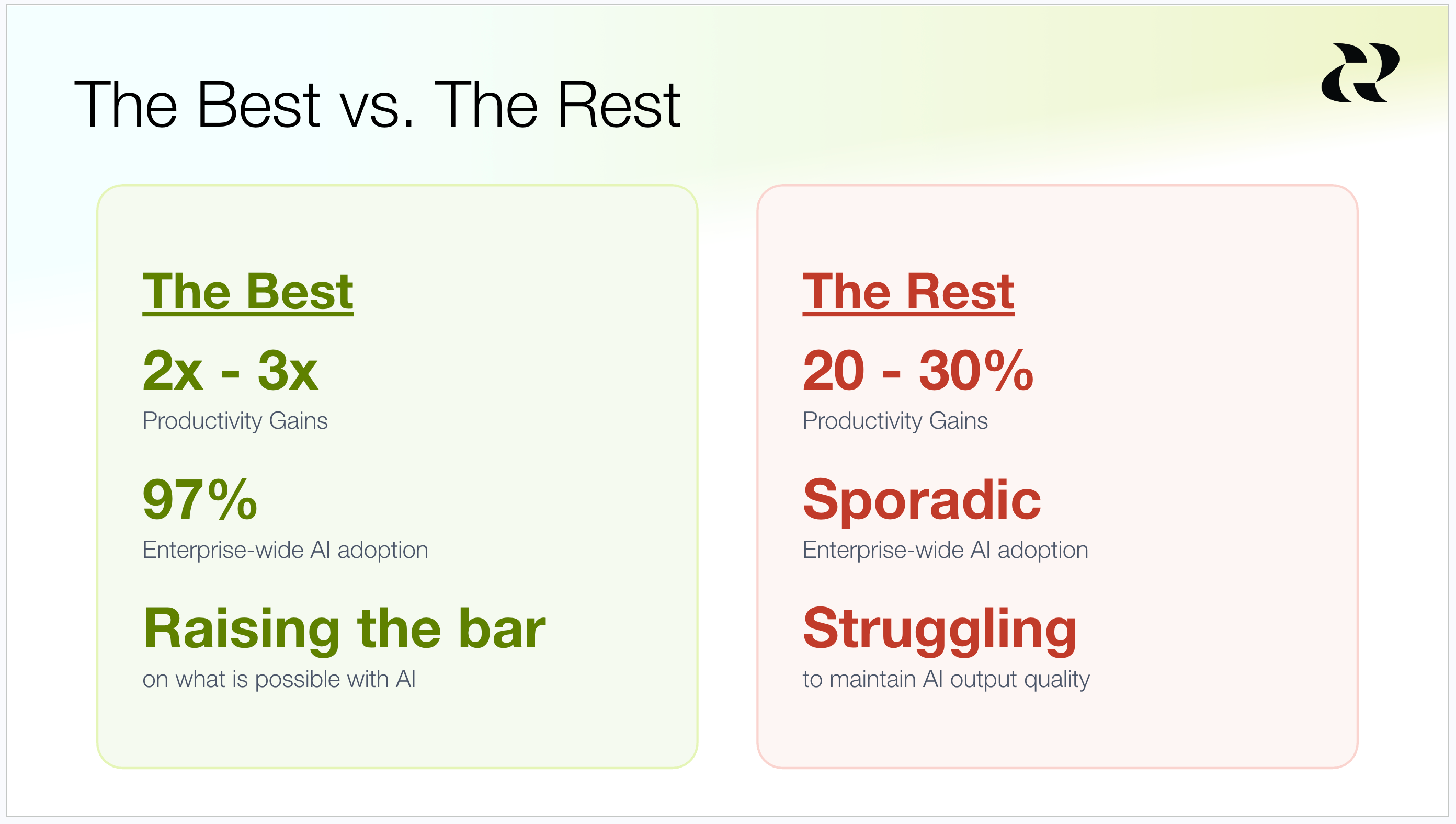
The most fascinating thing happening in product right now is that the gap between the best teams and the average teams on AI proficiency is widening, not closing. The elite teams are seeing 2x - 3x productivity gains as measured by merged PRs, while the average team is only seeing 20% - 30% lifts. The elite teams have broad and deep adoption across the org, while the average team sees sporadic usage. And the elite teams are raising their quality bar with AI, while the average team is drowning in AI slop.
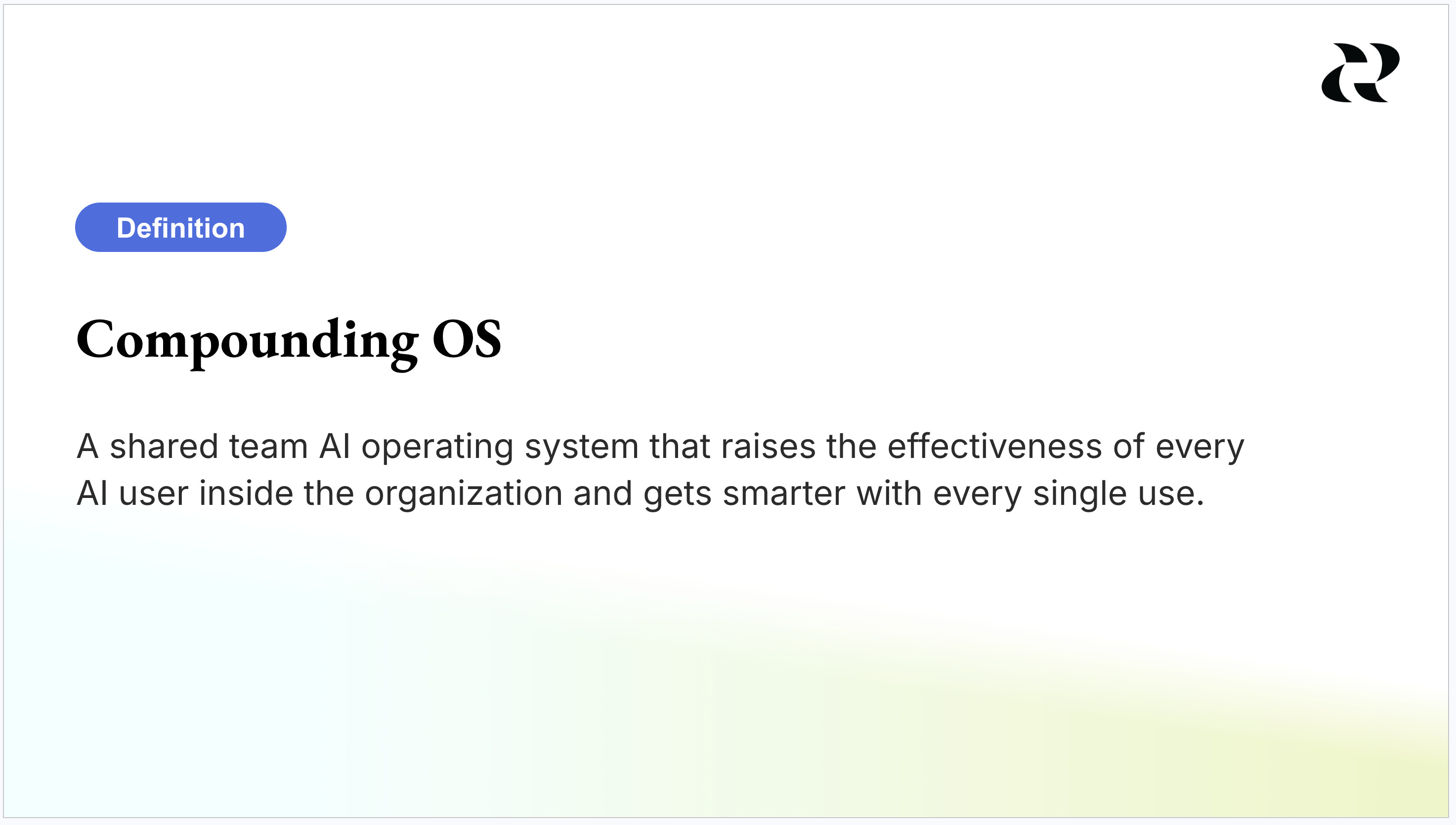
What separates them isn’t better models or bigger budgets. It’s that the best teams have stopped treating AI as a collection of individual productivity hacks and started building shared infrastructure. I call that infrastructure a compounding OS: a shared team AI operating system that raises the effectiveness of every AI user inside your organization and gets smarter with every single use. Others call it a company OS or a company brain. Whatever you call it, building one is the single highest leverage investment a product team can make right now.
Individual Productivity Versus Compounded Productivity
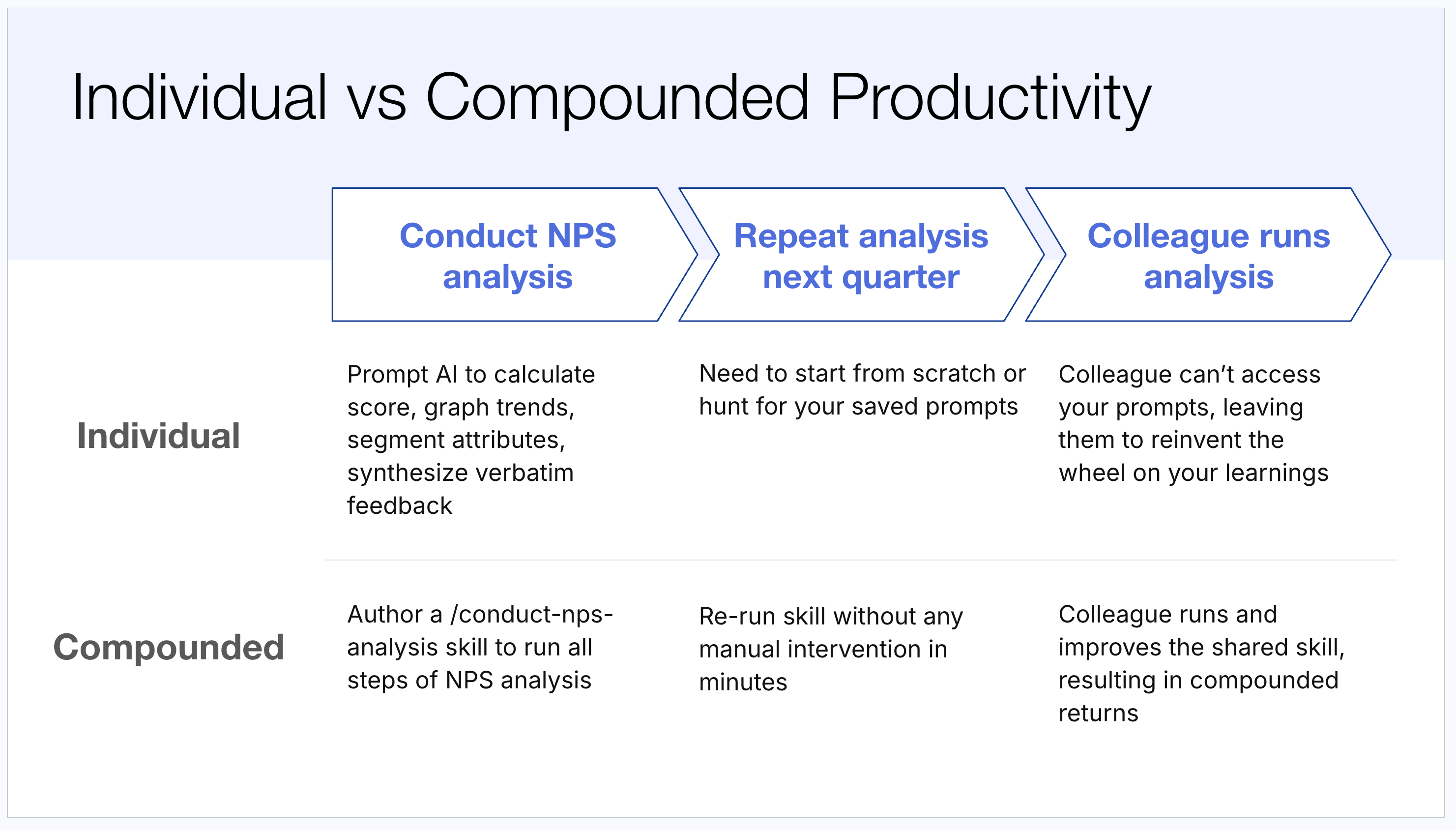
Let me make this concrete with a scenario every product team recognizes: running an NPS analysis.
Here’s how most teams do it today. You open up your favorite AI chatbot, hand it the raw CSV of your NPS responses, and start an interactive session. Calculate the average score. Graph it over time. Segment it by customer type. Then analyze the verbatim feedback: what did the promoters say, what did the detractors say, what themes are emerging. This is already a real improvement over the pre-AI world, where reading through all that verbatim feedback manually took weeks. You’ve compressed weeks into hours.
But watch what happens next. Next quarter, you want to run the analysis again. You’re back in an interactive session, retyping prompts or digging through old chat history to find them, and it takes you another couple of hours. Then a colleague wants to run an NPS analysis. He has no access to your prompts and no visibility into anything you figured out about doing this analysis well. He starts from scratch and repeats those same hours all over again.
Now here’s what a team with a compounding OS does instead. Rather than running an interactive session, they author a /conduct-nps-analysis skill that documents the entire workflow. Next quarter, they rerun the skill with zero manual intervention, and ten minutes later a complete report lands in their lap. At Notejoy, this capability is what let us move from quarterly NPS analysis to fully automated weekly NPS analysis. New responses come in, and every week I get a beautiful report without touching anything.
And when a colleague wants to run an NPS analysis, he finds the shared skill and runs it. Better still, he might improve it, and now everyone benefits from his improvement. That’s the shift from siloed individual productivity to team-wide productivity that gets better every time someone uses it.
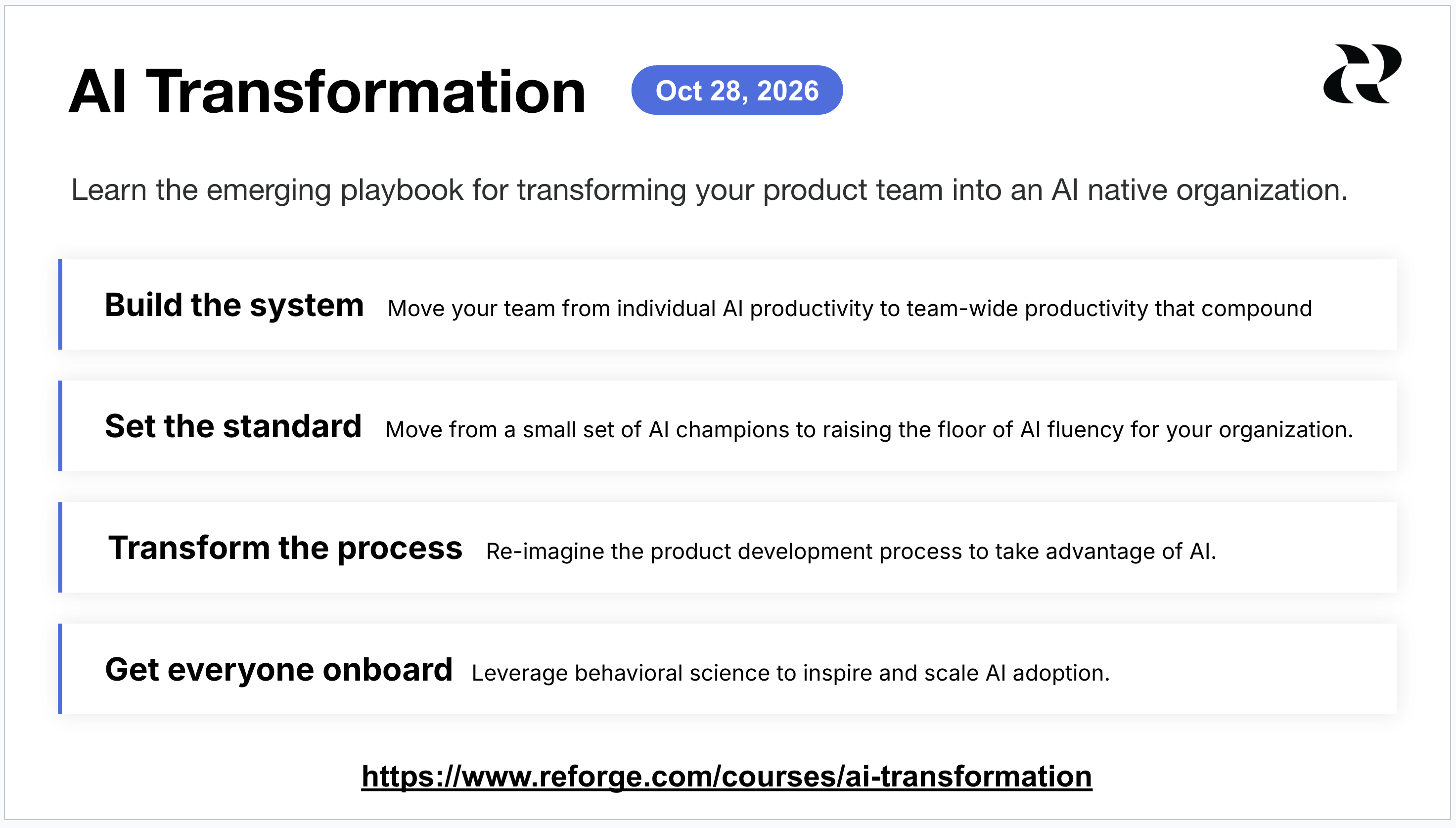
This article is a preview of my new AI Transformation course, designed to help product leaders learn the emerging playbook for transforming their product team into an AI native organization. Join us for the inaugural cohort starting Oct 28, 2026. Learn more.
The Three Steps to Building a Compounding OS
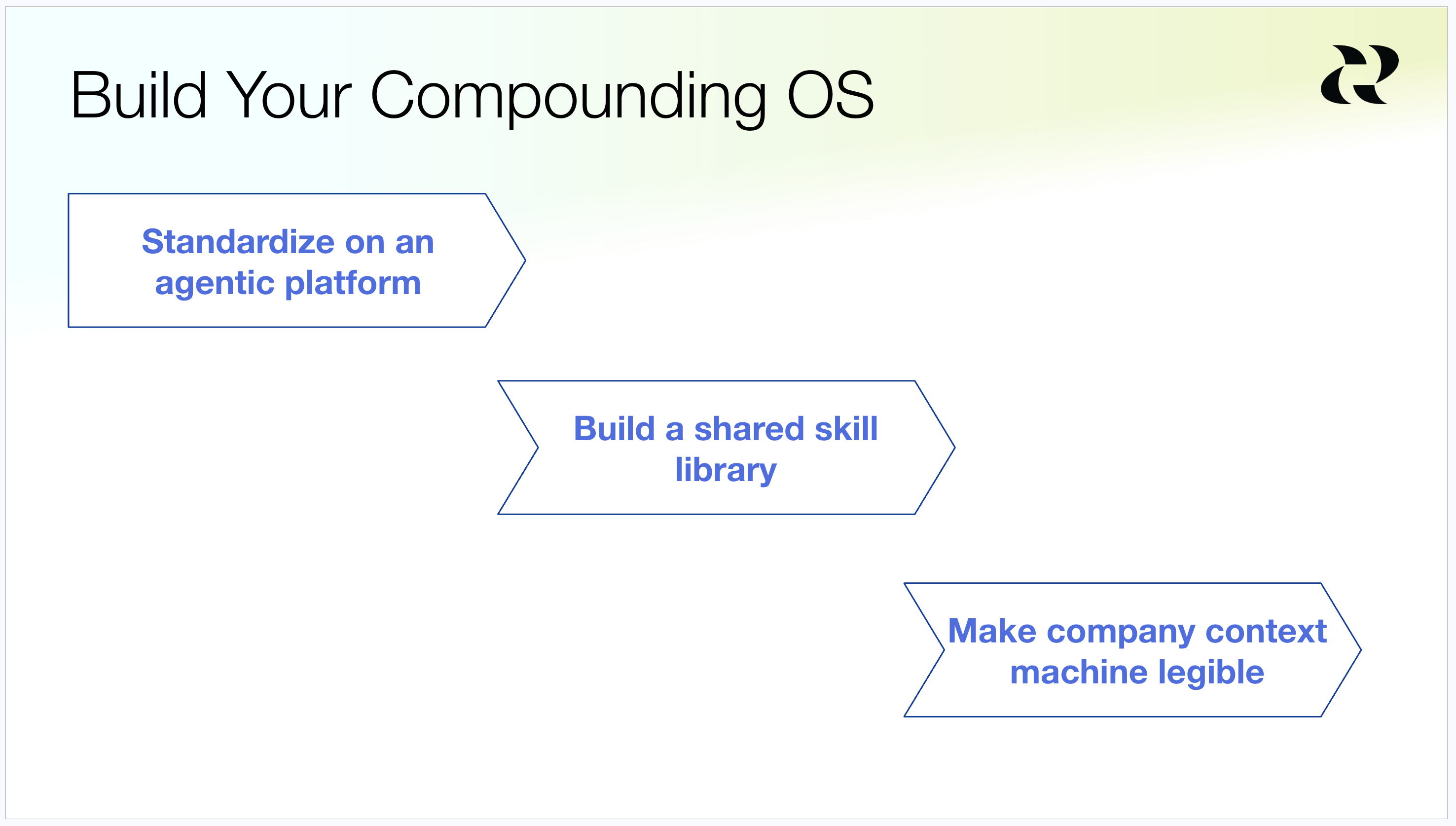
Building a Compounding OS comes down to three key steps:
Standardize on an agentic platform
Build a shared skill library
Make company context machine legible
Let walk through each of them in turn.
Step 1: Standardize on an Agentic Platform
The first move is to get your team off chatbots like Claude, ChatGPT, and Gemini and onto agentic platforms like Claude Code, Claude Cowork, and Codex. There are three reasons agentic platforms unlock so much more value than chatbots.
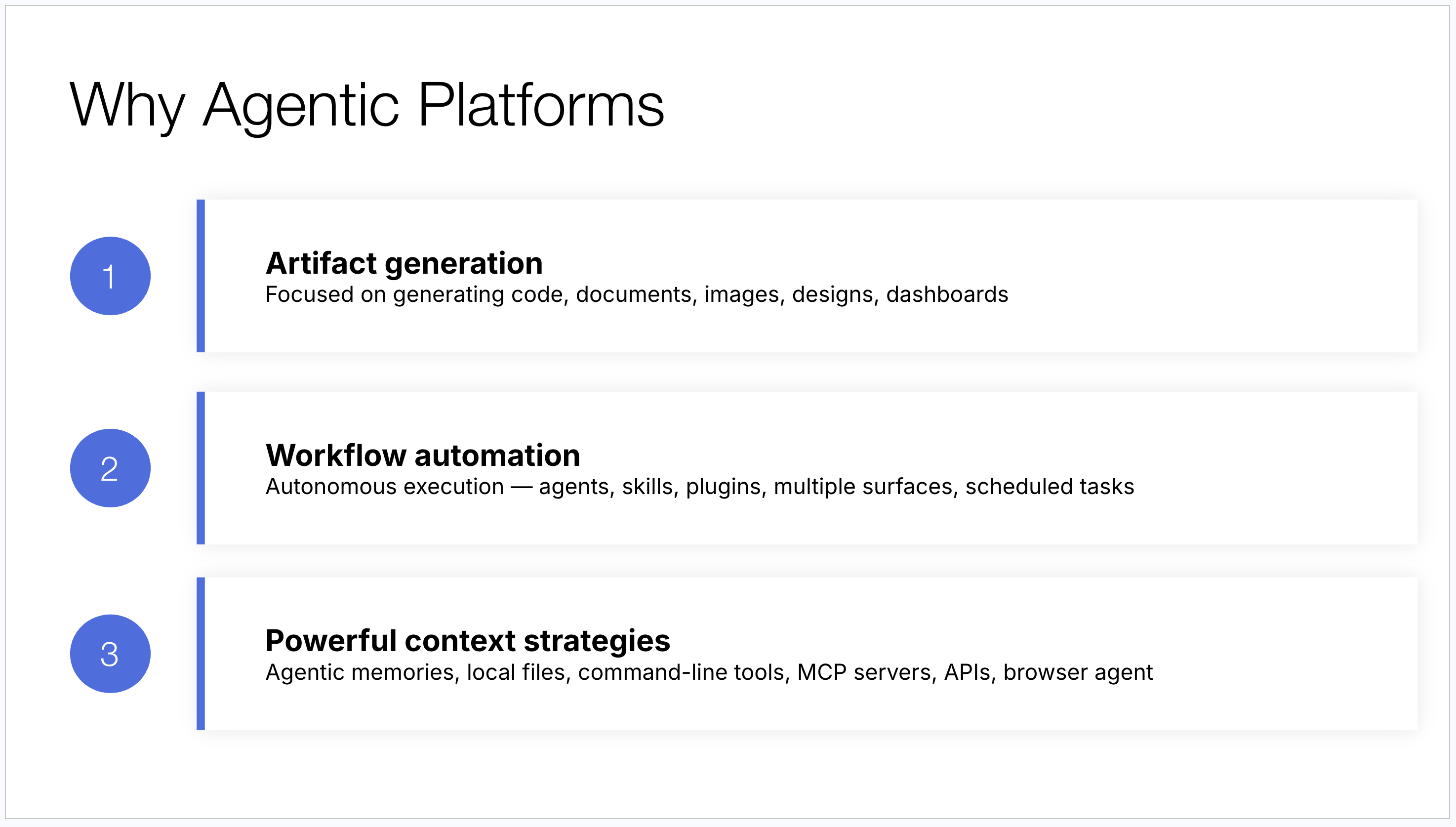
Artifact generation. A chatbot is optimized for responses and answers. An agentic platform is optimized for producing deliverables: code, documents, images, designs, prototypes, dashboards. That focus on generating artifacts is what lets AI do work for you rather than simply answer your questions.
Workflow automation. Agentic platforms give you primitives like agents, skills, plugins, and scheduled tasks that let you automate a task end to end without manual intervention. That’s what takes your AI leverage to the next level.
Powerful context strategies. A workflow is only as good as the information it can access. Agentic platforms offer sophisticated context strategies including agentic memories, local files, command line tools, MCP servers, APIs, and browser agents. They go well beyond anything available in a chatbot.
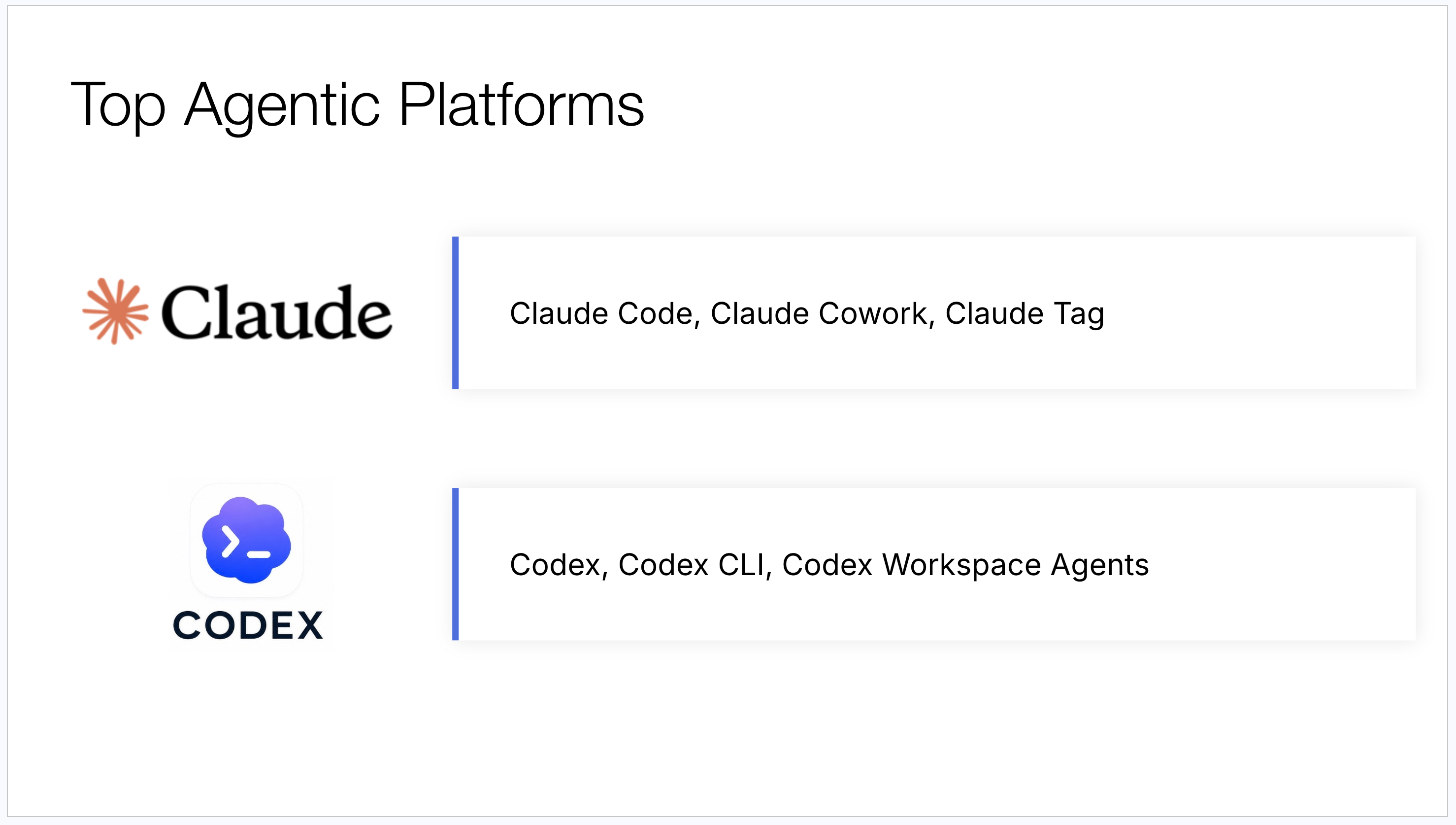
The top two platforms today are the Claude platform and the Codex platform. Claude gives you Claude Code in the terminal and desktop app, Claude Cowork for a friendlier interface, and Claude Tag to bring the platform right into Slack or Microsoft Teams. Codex from OpenAI offers a very similar set: a desktop app, a terminal app, and workspace agents that live in Slack.
People always ask me which one is better. Honestly, whatever I tell you today will be wrong next month, because each platform copies the other’s best features almost immediately. You cannot go wrong with either one.
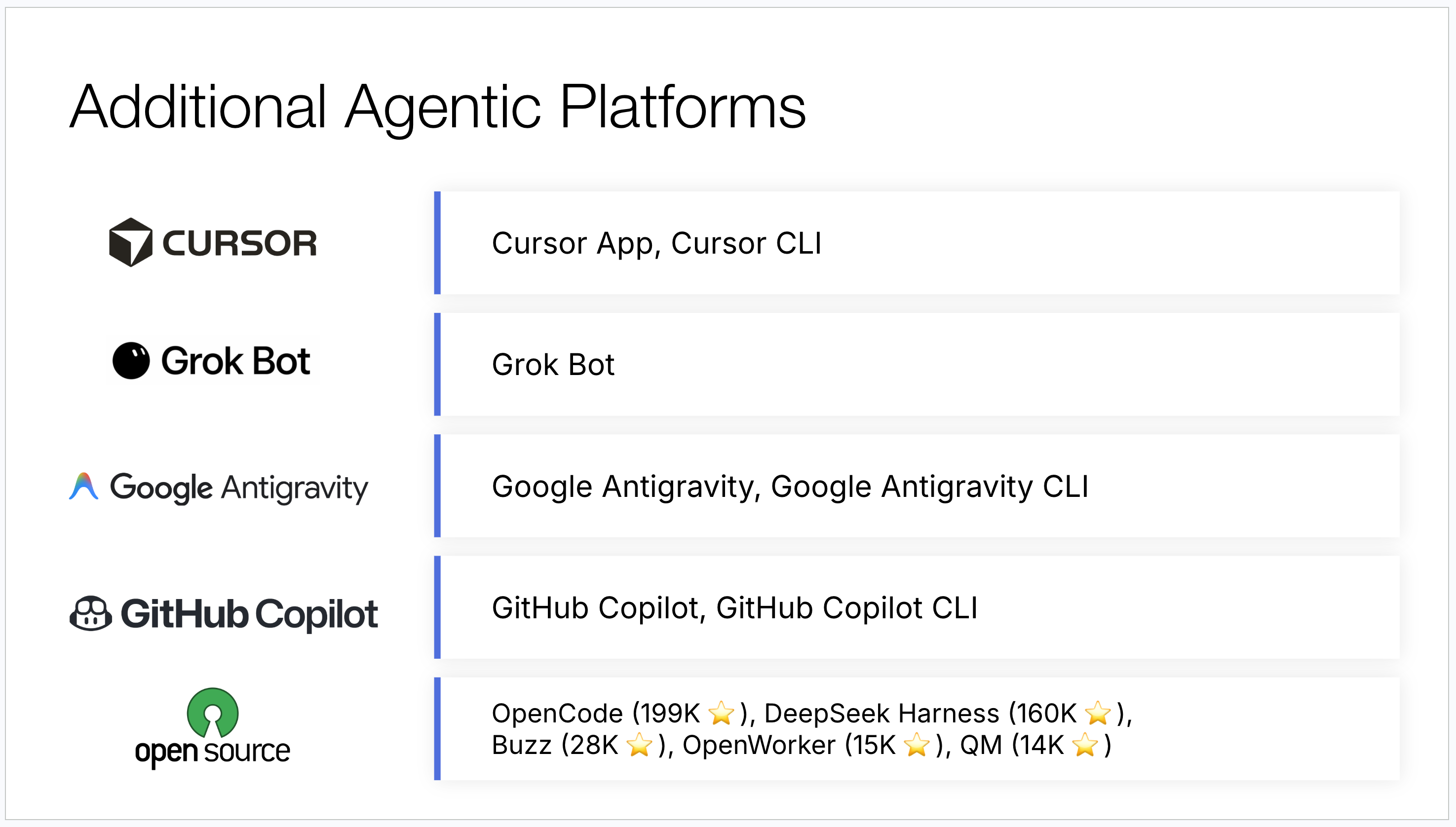
They’re not the only options. Cursor is popular because you can run both Anthropic and OpenAI models inside it. Grok Bot is generating a lot of buzz right now. If you’re locked into the Google or Microsoft ecosystems, Google Antigravity and GitHub Copilot both exist, though I’d caution you that they aren’t nearly as capable as the leaders. And there’s a growing set of open source harnesses like OpenCode, DeepSeek Harness, Buzz, OpenWorker, and QM, whose main appeal is that they let you run any model, including local ones.
Why Standardize at All
Here’s where I get pushback. With this much innovation happening every week, how can you possibly commit to a single platform?
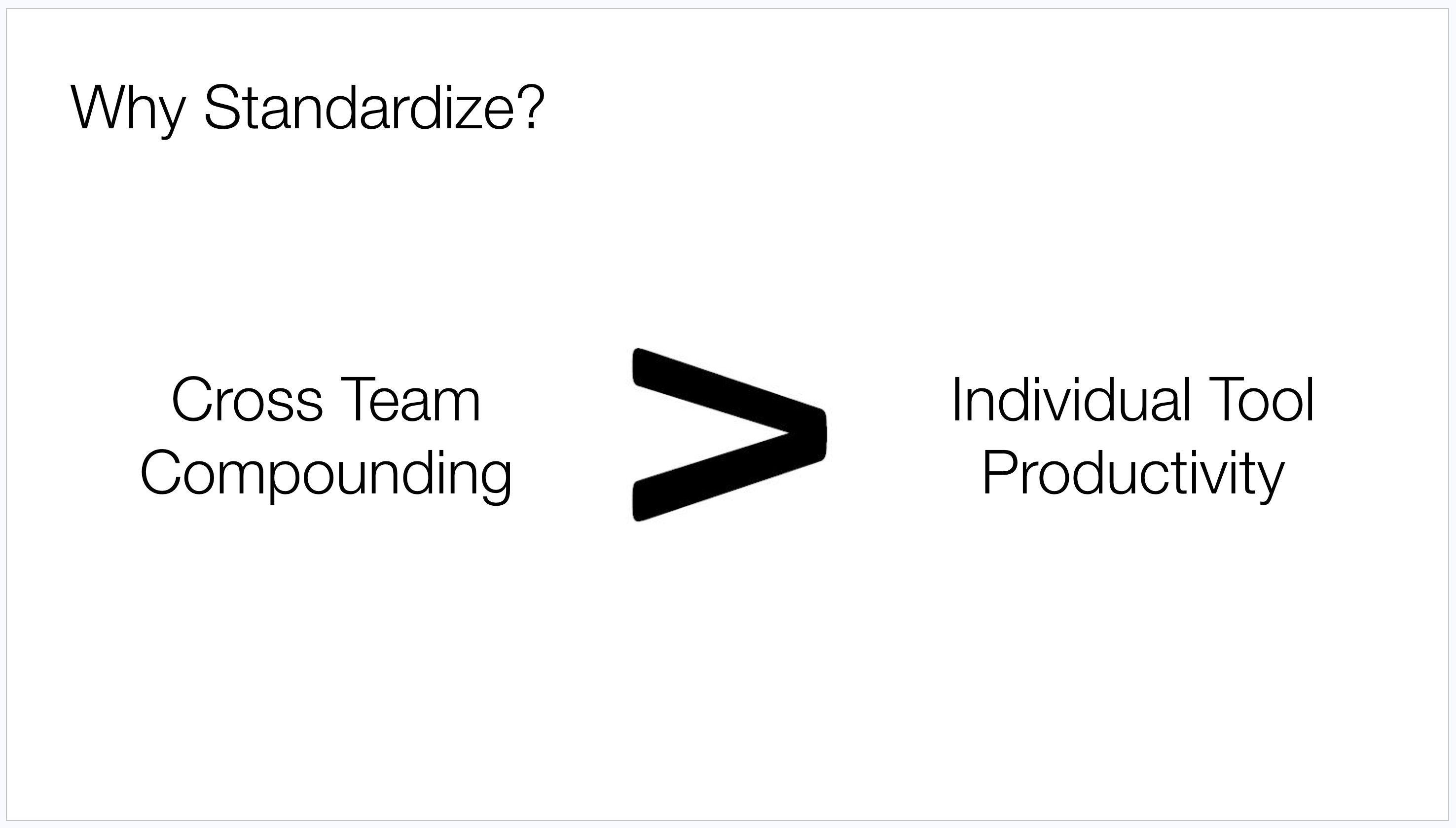
My answer is that committing to a single platform buys you cross-team compounding, which matters far more than any individual tool’s productivity edge. It doesn’t much matter if you’re on Claude and missing out on some Grok Bot capability, because you’re capturing that capability in isolation anyway. Getting your entire team compounding through shared skills and shared artifacts is dramatically higher leverage.
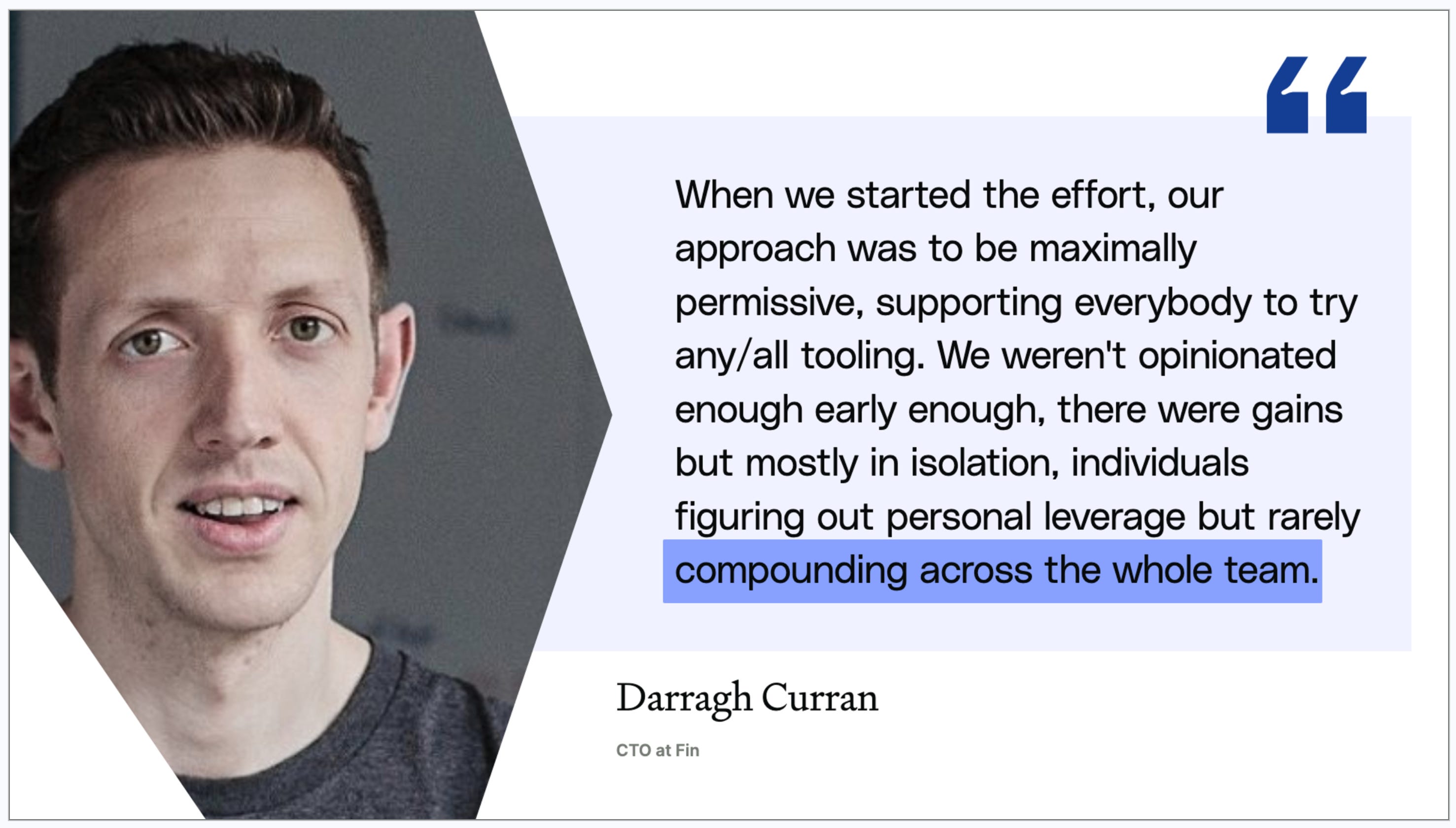
Darragh Curran, CTO at Fin, described exactly this in reflecting on their own journey:
“When we started our effort, our approach was to be maximally permissive, supporting everybody to try any and all tooling. We weren’t opinionated enough early on. There were gains, but mostly in isolation.”
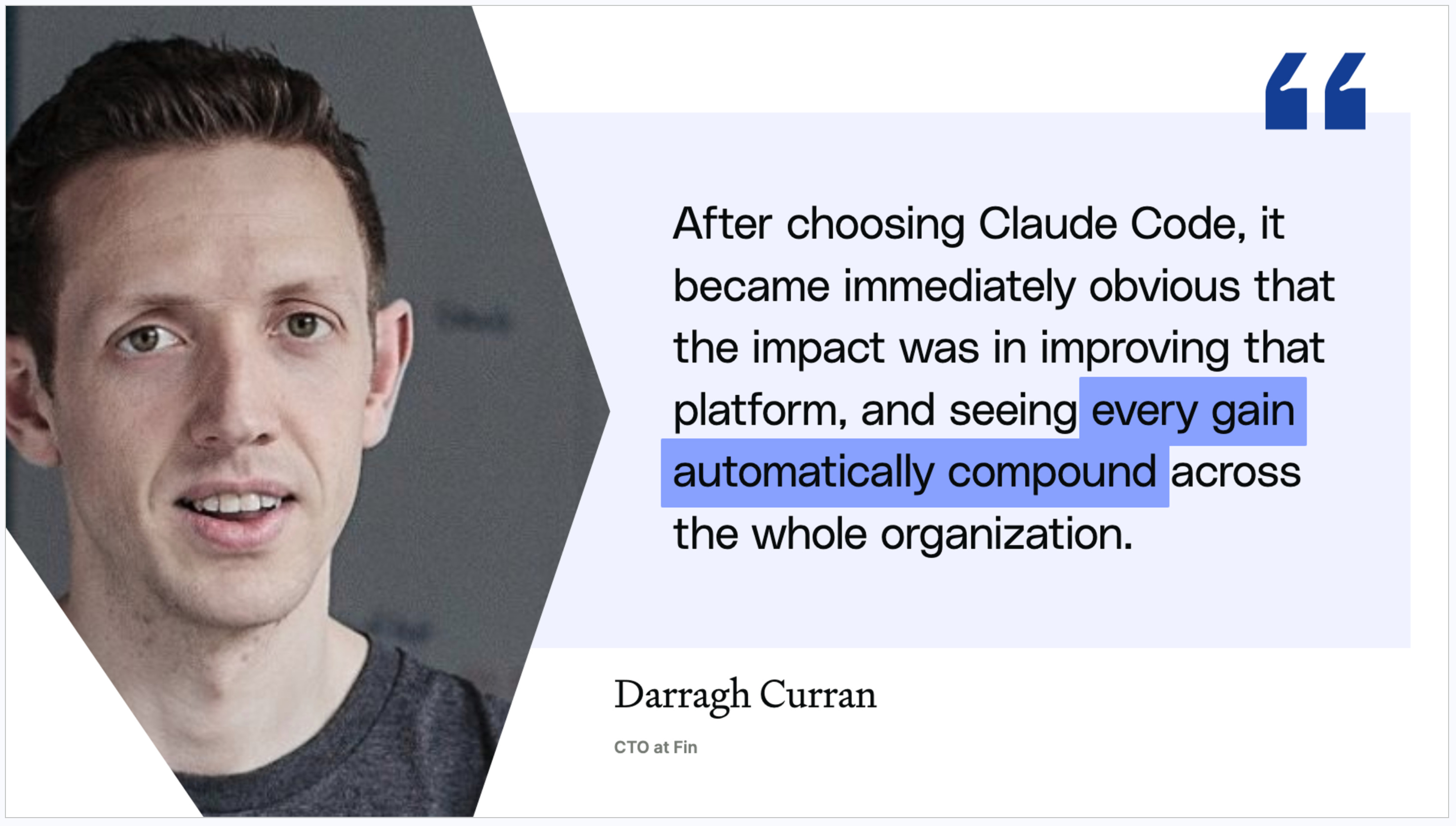
After they standardized on Claude Code, he said it became immediately obvious that the impact was improving that platform and seeing every gain automatically compound across the whole organization.
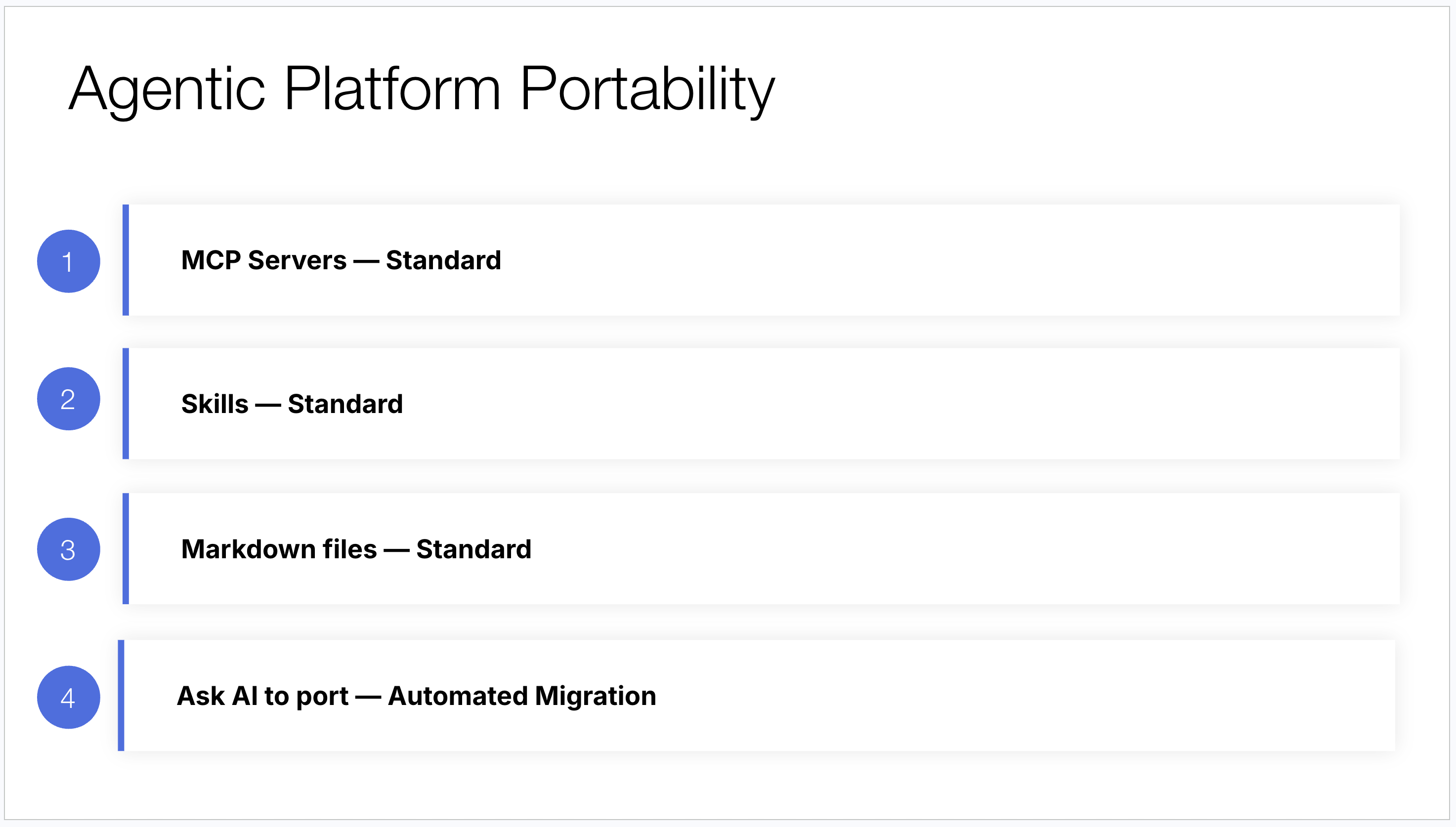
And you shouldn’t fear the commitment, because agentic platforms are remarkably portable. MCP servers are the standard way to connect third party tools and they work across every platform. Skills are converging on an open standard. Markdown files, which is where most of your local context lives, are readable everywhere. The only genuinely platform-specific pieces are a handful of configuration files, and you can literally ask your new platform to port them for you. Tell Codex you have a bunch of Claude projects and ask it to make them Codex compatible. Wait ten minutes. You’re migrated. There’s effectively no lock-in, so pick one and standardize today.